Our Conversation About Christianity [Video/Audio]
For those moved by Christianity even if “Christians” might reject us.
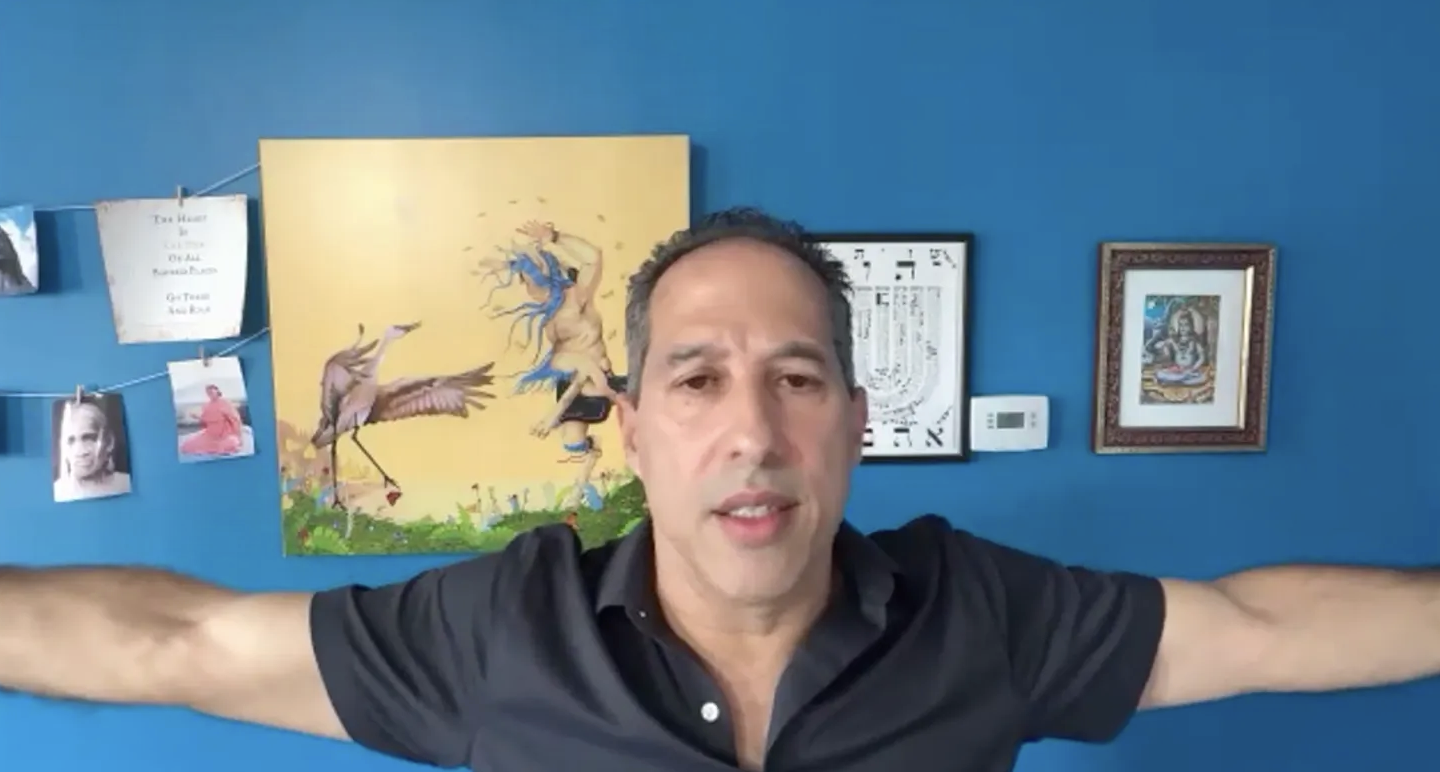
A few weeks ago, I invited those of you who feel some curious or openhearted connection to Christianity—regardless of how unorthodox that connection might be—into a conversation.
Here I am sharing the recording of that conversation.
Note that the link is to a video, but you can certainly treat this as an audio.
While the conversation on Christianity was for a much narrower audience, you can check out the first, broader conversation here: Returning to Religion?
In this second conversation,I began by sharing some of how I am making sense of Christianity today.
Mine is very far from orthodox theology. It is the sense-making of someone who grew up intensely Christian, has wandered and found gold far beyond its boundaries, and now finds himself experiencing the Christ from a radically different perspective than most churches would “approve of.”
The Story Made Flesh
We spoke about Christianity as mythopoetic truth.
We spoke about the incarnation: the mystery of the divine becoming flesh.
We spoke about the crucifix. Not as a promise that suffering can be escaped. But as a confrontation with life’s inescapable terms: betrayal, humiliation, sickness, loss and death.
And about the possibility of meeting those terms as Christ did.
In contemplating the authentically brutal, archetypal image of the crucifix, we see a good but dead and tortured man hanging on a cross.
And we find a central teaching about how to meet the suffering and the tragic in our enfleshed human existence:
You open your arms.
You forgive.
And you love anyway.
Receiving Love
We also spoke about faith as the opposite of fear, and about how the active and necessary practice of receiving love from a power that is much greater than ourselves can be facilitated when we experience that force—that God—as an actual person.
Love Against Empire
We spoke about the revolutionary love at the heart of the Christian story, despite all the ways Christianity has betrayed it.
And about how the practices of the early, pre-institutional, violently persecuted Christians began to undo the Roman Empire long before Constantine’s imperial co-optation, 300 years after the Christ.
This way of looking at it reinforces my conviction that rebellion and revolution can require divine intervention, ritual, synchronicity, or a political “miracle”.
Not merely strategy and material conditions.
A Life Slow Enough for God
Inspired by John Mark Comer’s book, The Ruthless Elimination of Hurry, we spoke about apprenticing ourselves not only to what Jesus taught, but to how he lived.
Here we were following Comer as we talked about practicing solitude as a way to listen to the divine. We talked about taking the practice of a true day of rest much more seriously. We talked about moving towards simplicity in our lives, and about learning to live at a slow enough pace to hear God. (Find a short take on his work here: An Ancient Cure for Modern Hurry.)
Know that I am passionately convinced that ruthlessly eliminating hurry will not only transform my experience of life itself but also help revitalize and renew our collective effort to meet the challenges of the metacrisis.
The Space Alive Between Us
Then the conversation opened, and others brought their own longing, resistance, wounds, questions and devotion.
I left deeply moved by the aliveness and the medicine that rose so beautifully among us, the openhearted and the curious.
The recording is now available. You can watch the video or simply listen: