Fortitude is the Courage to Stay Human
tl;dr: Fortitude is the courage to remain human in the face of dehumanization. Bryan Stevenson shows us what that looks like through American history and the story of the people it enslaved. It is not toughness or righteousness, but the inner strength to resist cruelty without becoming cruel ourselves.
I’m going to be honest, I sorta looked the other way during the 250th anniversary of the nation’s founding.
It’s not that I’m down with the “politically unpatriotic” posture of many people around me. I actually believe we have to care about the nation we call home, even if we remain deeply critical of it. There is value in living in a world where different peoples continue to experiment with democracy, even when the odds against freedom remain high.
My looking away did have something to do with the tragedy of turning 250 under a nightmare regime.
And it had even more to do with the fact that I was born a colonial subject. And with the fact that in the five centuries since Columbus reached the shores of Borikén, the people of Puerto Rico have never been allowed to discover what national sovereignty might mean for us.
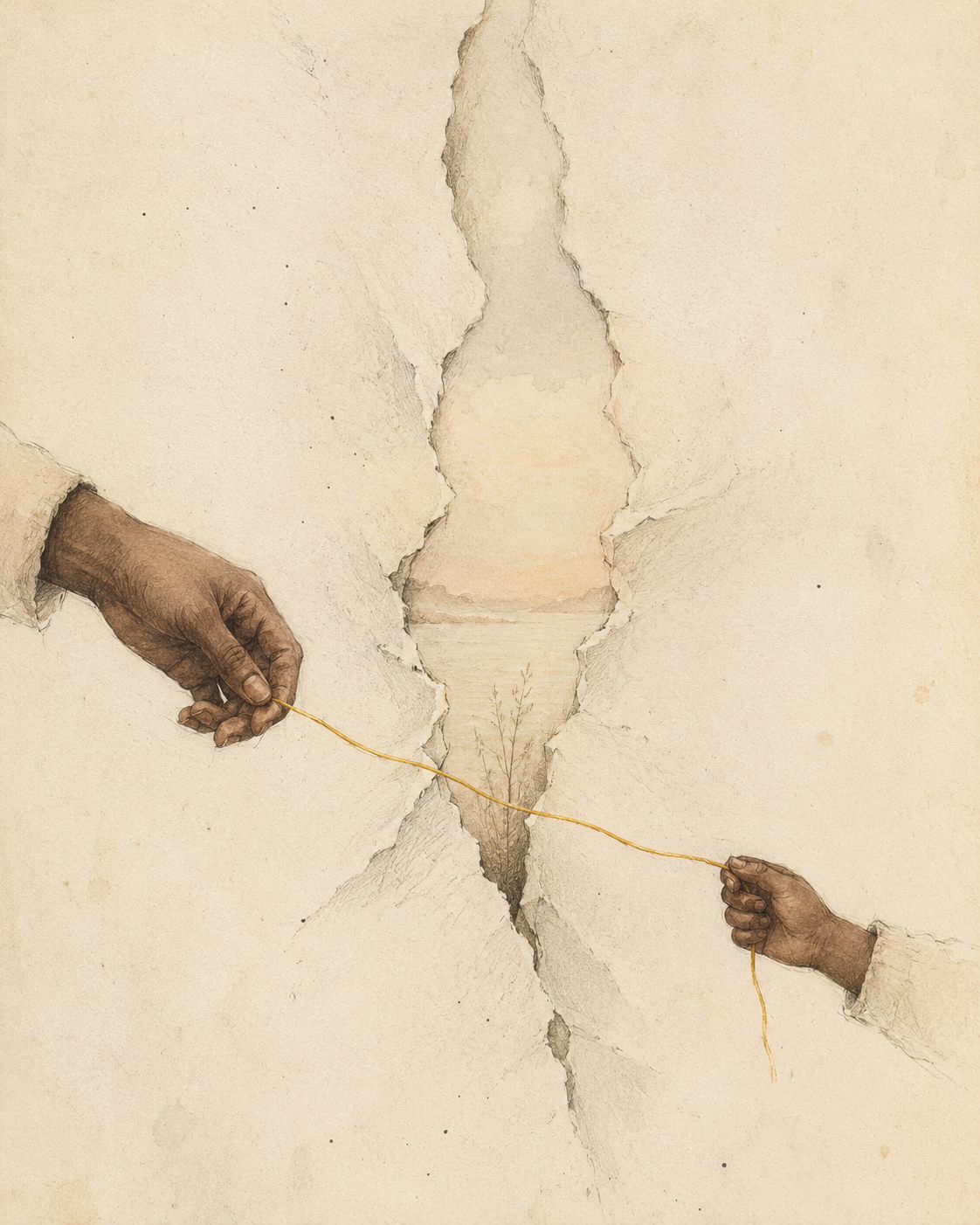
But in all that looking away, I am so glad that this conversation between Bryan Stevenson and Ezra Klein caught my gaze: Loving America Honestly.
It is one of the most relevant conversations any of us could listen to right now. Stevenson is not only smart, passionate, creative, and committed. Bryan Stevenson is wise.
The conversation illuminates the central claim Tuesday and I have been developing in our work on moving From Fragility to Fortitude.
Stevenson begins by reconsidering who the true heroes of abolition were:
I think we’ve tended to make the abolitionists the heroes of the anti-slavery movement, that they were the leaders who won the struggle for emancipation, and I just think that’s not complete. I even think it borders on dishonesty.
I think of the 10 million people who were enslaved over 246 years and found a way to hold on to their humanity and their dignity. There’s nothing more that contributes to abolition than to stay human when you’re being treated as an enslaved person, to hold on to your dignity when you’re being denied your dignity, to hold on to your humanity when your humanity is being crushed.
I think they are the heroes of that story. They are the champions.
And you could be in Boston [or on Substack!] writing nice and polite things that others can read, but that’s not the hard thing about enduring enslavement. It’s not the hard thing. It’s not going to be the thing that gets us where we’re trying to go.
That is fortitude.
To be born enslaved, to know that your children are likely to die enslaved, and to dare to love, sustain one another, to drum and sing songs of prayer together anyway. That is fortitude.
Stevenson spells it out in a way that is painful, beautiful, and sobering:
Most people haven’t thought about what it was like to be an enslaved mother and to give birth to a child, maybe even as a product of rape, and have to decide: Do I love this child or not? Half the people I know are being sold away from their children, or their children are being sold away from them. If I love this child, my heart is going to be broken, so maybe I shouldn’t love this child so much because it’s just too fragile. It’s too likely that they’ll be pulled away from me.
And when you learn that most of these mothers chose to love despite the threat that they would be sold, despite the fact that this was a product of sexual violence and rape, you begin to see something different about that enslaved woman. You begin to understand something different about these people. And if you don’t understand that, then you’re going to misunderstand the nature of slavery.
We want to be very direct about the harms and the horrors of slavery. But we also want people to understand the resilience, the power, the strength, the courage, the character of people to love in the midst of agony.
That is fortitude.
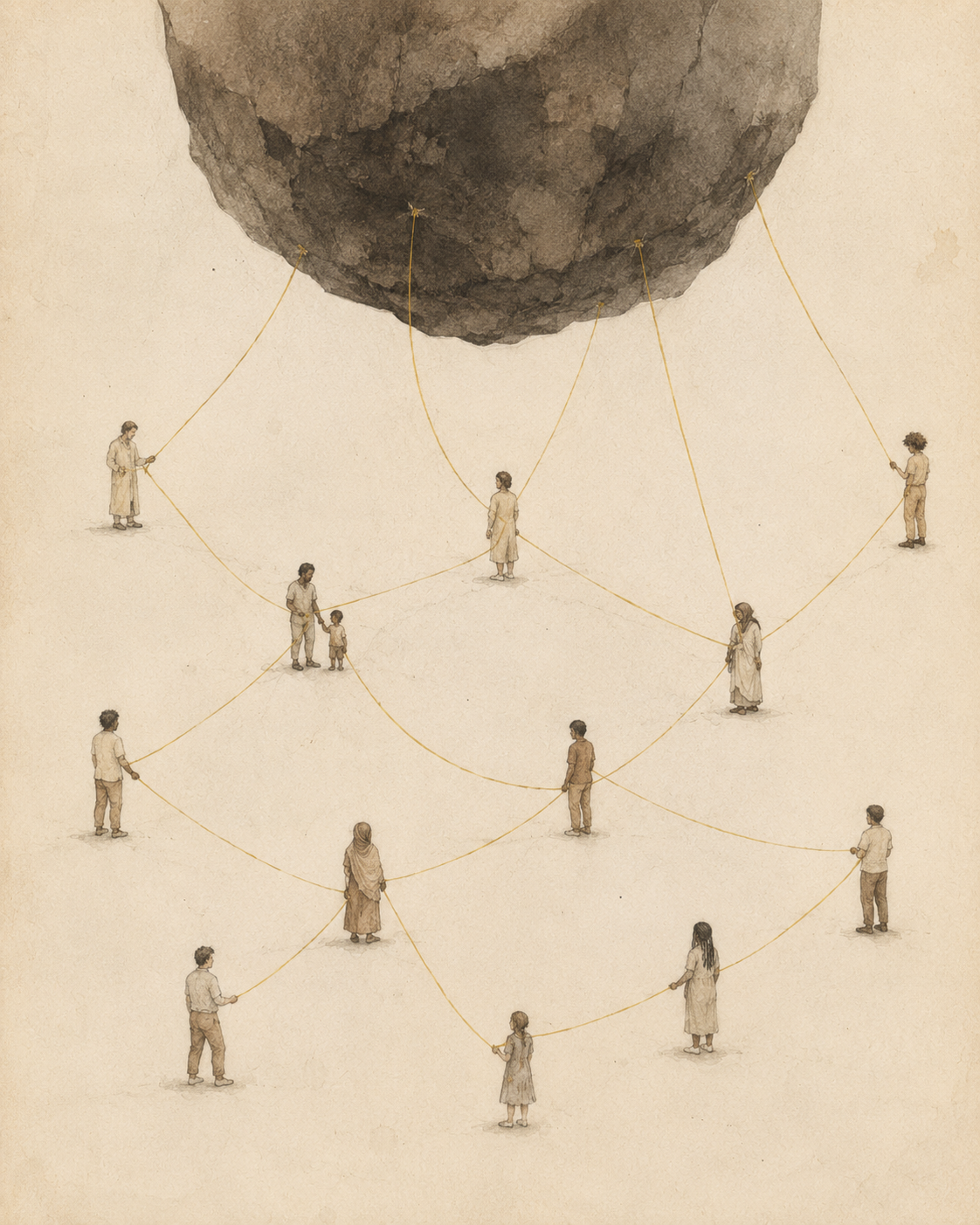
Later victories cannot justify the suffering of those who lived and died through this foundational horror, love and dignity could not erase the violence. But they prevent the violence from having the final word. It is that humanity that is preserved, passed forward, and carried into the struggles that follow.
And it is a hundred years after the Civil War, after betraying the promises of Reconstruction, after poll taxes, racial terror and lynching, after Jim Crow segregation, exclusion from land ownership, from the New Deal, from the GI Bill that Dr. King speaks.
Stevenson reminds us of that first speech during the Montgomery bus boycott:
He gives the first speech at the first mass meeting, he’s being very ornate with his language. He’s got all of the flourishes, and he’s being very methodical, and he’s saying what happened to Rosa Parks. But at some point, after laying it all out, what he says is:
‘But we’re tired now.’
And that’s when everybody erupts. It was the exhaustion of constantly dealing with the status quo, the humiliation, the degradation, the constant threats and menacing.
People said:
‘We want our freedom, and we want our freedom now.’
Most of them were prepared to die for their freedom.
There is great fortitude in recognizing when endurance has reached its limit. In saying: Enough. This cannot continue. There is great fortitude in becoming willing to risk one’s life for what is right.
But all of it is rooted in a moral power that is very different from ideological self-righteousness. And it is diametrically opposed to the politics of resentment that we’ve indulged in our own time.
I think the brilliance of that generation of leaders is that they knew that they didn’t have the economic power, the military power or the political power to force change, so they had to use the power they had.
There was a morality in standing up against violence with nonviolence, being well-dressed and disciplined in the face of all of this brutality. When people were cussing and swearing at you, you were smiling, sending your children into spaces where they would be fire-hosed or menaced by dogs or beaten and brutalized.
It was a profound, unprecedented use of moral power, of using humanity to confront the inhumanity of those who abuse. It’s hard, incredibly difficult, but I think people had an appreciation that that’s what it was going to take.
That is Fortitude
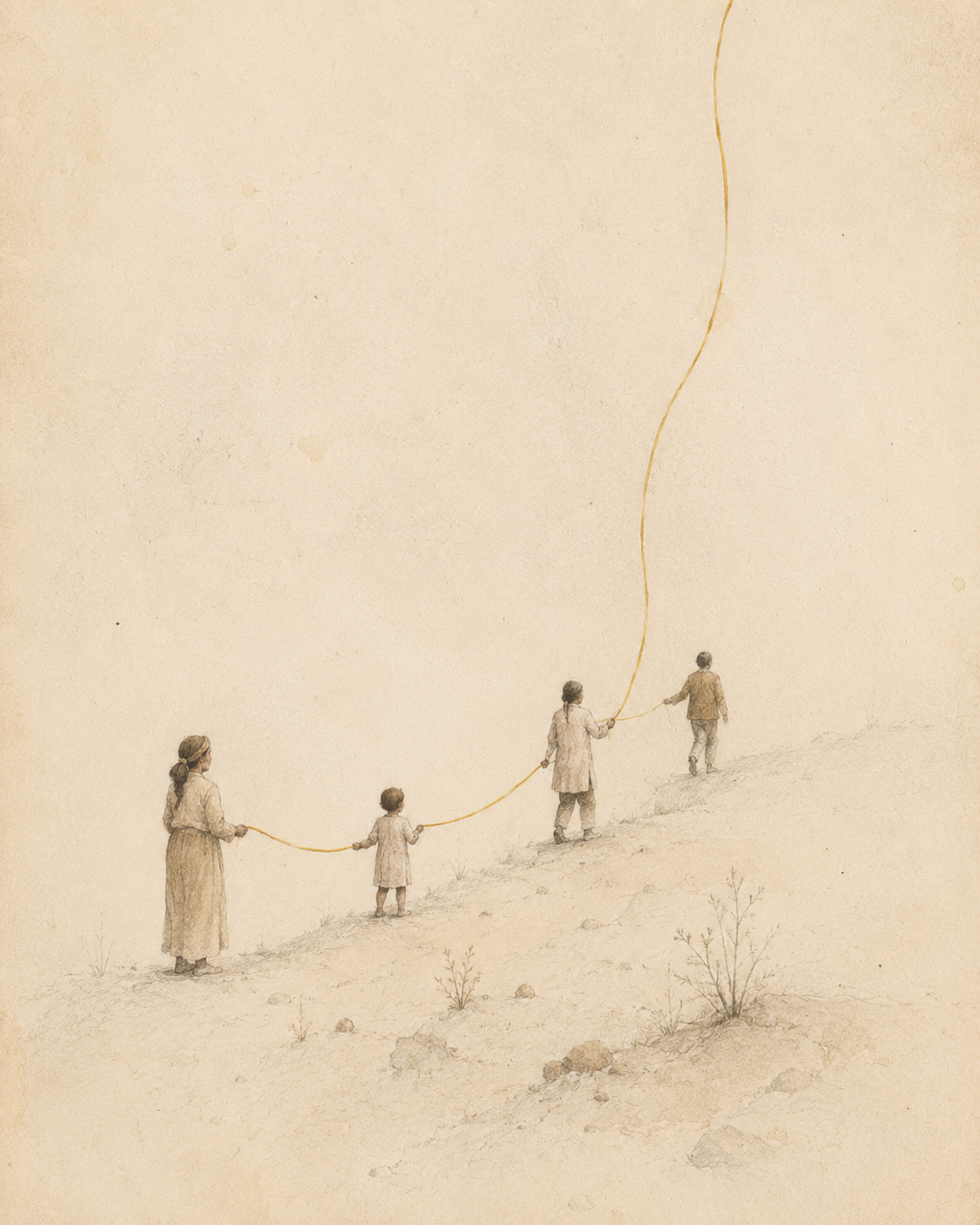
Fortitude is born of moral clarity and developed through a process of human maturation. It requires growing our self-sovereignty: our capacity to bring ourselves to coherence. The inner authority that comes when we are not governed by fear, humiliation, group pressure, or the behavior of an opposing force.
Without that inner authority, we cannot withstand the heat of conflict. We instead become reactive, brittle, or cruel. Fortitude is a defining attribute of self-sovereignty. And developing fortitude is what will allow us to fully participate in any collective endeavor for liberation.
This is where Stevenson gets personal.
And no matter what I do, no matter what I say, I will still go places in this country where I am presumed dangerous and guilty because of my color. I still have to navigate presumptions of incompetence because of my color.
I still bear the burden when I’m stopped by the police to make sure that nothing tragic and violent happens. So do my nephews and nieces and their children. And it’s continuing, and it’s continuing.
When you have to constantly navigate a presumption of dangerousness and guilt because of your color, when you have to constantly confront presumptions of incompetence, when you have to constantly bear the burden of other people’s ignorance, it’s exhausting.
And when you get to a certain point, you say: ‘I want freedom, and I want freedom now.’ To get to that something better, we’re going to have to do some things differently.
How can we possibly create something different without cultivating the fortitude required to live through this exhaustion and not be consumed by it?
Stevenson and Klein also discuss the fear of retaliatory insurrection that has long permeated white Southern consciousness. His work does not only capture the dehumanization inflicted upon Black people, but also the moral deformation required for white people to sustain such a system. Consider a society where it became proper to bring children to a lynching, to turn a lynching into a into a social event, and to quite literally make postcards out of it?
You gotta sacrifice your children to keep such monstrosity alive.
This is moral devastation. It is a brutality inflicted upon the collective soul. It harms the oppressor and the oppressed in radically unequal ways. But it threatens the humanity of everyone involved. Without a connection to something greater, something wiser, older, and more potent, we are left without either fortitude or hope.
We crumble upon ourselves.
Stevenson argues that in many ways, the racial uprising of 2020 and the reckoning that followed was too easy.
And he is right to say it was too easy.
But I don’t think it was too easy just because it was easy to put up a sign. And because it has become too easy to organize spontaneous protests online. Or because it was too easy to be fooled and co-opted by corporate marketing departments and easy to erase DEI initiatives.
It was too easy because it gave us a way to perform righteousness without demanding the challenging work of our own moral development.
It was a process that allowed us to weaponize shame and guilt. It allowed us to dehumanize anyone who could be deemed an oppressor. And it allowed us to indulge resentment as a legitimate political stance. Resentment is not moral, it is “moralist.” And it actually left us bankrupt.
And in this way it was not hard enough. Not demanding enough of our very souls. It did not turn us inside out all the way through.
Look. This is not an indictment. This is how all movements grow. We learn what works and what does not work. The most important lessons for humanity have to be learned over and over again.
I met the people for whom this was not easy at all. I spent time facilitating rooms of people who put their bodies on the line. I worked with people who allowed their hearts to break in that way that the heart breaks when it demands to grow into something more beautiful, courageous and wiser again.
We are in the process of becoming people capable of confronting dehumanization without reproducing it. Capable of telling the truth without giving in to contempt. People capable of enduring exhaustion without allowing it to hollow out our souls.
That is the work before us.
And it looks a lot like fortitude.